Trading is one of the most exciting parts of UG VR. Building a collection, finding valuable dinosaurs, and negotiating trades with other players can be very rewarding. However many new players lose valuable dinosaurs because they make simple mistakes during trades.
The good news is that most trading mistakes are completely avoidable. By understanding how values work and learning from common beginner errors you can protect your inventory and make smarter decisions.
In today’s guide, we’ll cover the most common beginner trading mistakes in UG VR and explain how to avoid them. Whether you’re making your first trade or trying to improve your trading skills, these tips can help you keep more value in your collection.
Why Beginners Lose Value So Easily?
Most new traders focus on appearances rather than actual value. A trade may look impressive because it contains several dinosaurs, bright colors, rare-looking creatures, or high-level dinosaurs. However on the other side experienced traders know that appearance does not always equal value.
Many beginners accept offers based on excitement instead of analysis. They see a dinosaur they want and immediately agree to the trade without comparing both sides properly.
Successful traders take a different approach. They focus on numbers, value ranges, rarity, demand, and long-term worth rather than emotions. Learning this mindset is the first step toward becoming a better trader.
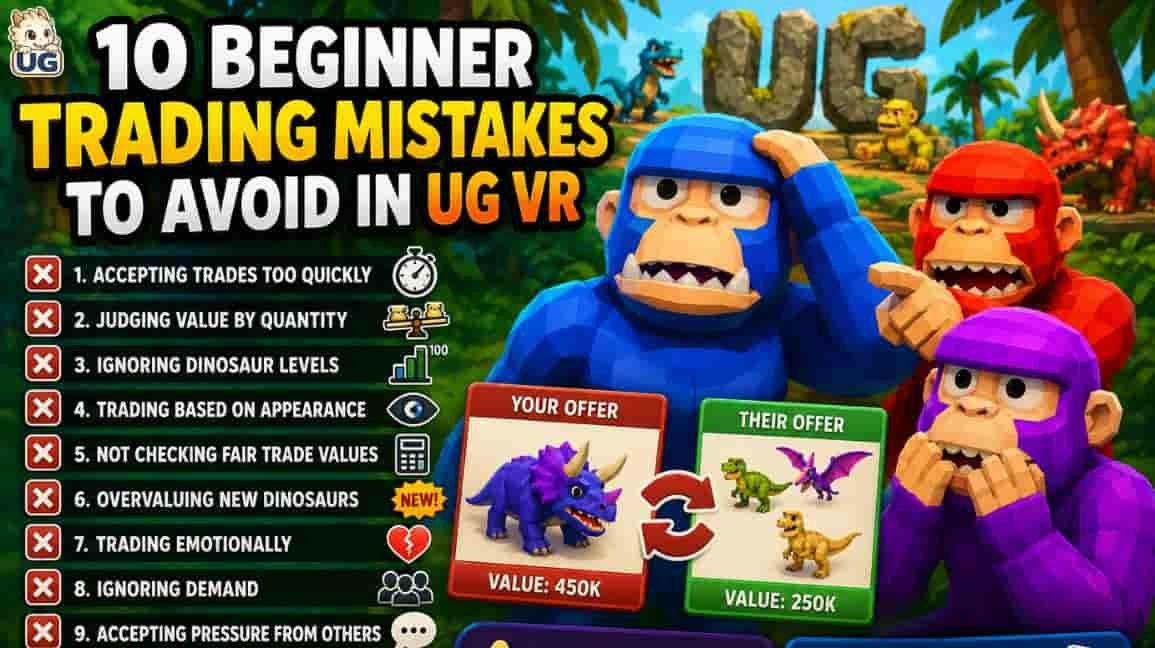
Mistake #1: Accepting Trades Too Quickly
One of the biggest mistakes beginners make is rushing into trades. A player sends an offer and instead of evaluating it carefully, the beginner accepts quicklyy because the trade looks attractive. This often results in giving away more value than they receive.
Before accepting any trade, take a moment to compare both of the sides. Ask yourself whether the values are actually balanced. Even waiting an extra minute can save you from a costly mistake. Experienced traders rarely rush decisions. They understand that patience is one of the most valuable trading skills.
You can also read: Top 10 Most Valuable Dinosaurs in UG VR
Mistake #2: Judging Value by Quantity
Many beginners believe that receiving more dinosaurs automatically means they are getting a better deal. For example, one player may offer 5 dinosaurs in exchange for a single dinosaur. At first glance, that might seem like a great trade.
However, if the single dinosaur is worth more than all five combined, the trade is actually unfavorable. Value matters far more than quantity. A high-value dinosaur can often be worth multiple lower-value dinosaurs. This is why experienced traders compare total value rather than simply counting creatures. Always focus on what the dinosaurs are worth not their numbers only.
Mistake #3: Ignoring Dinosaur Levels
Levels can have a major impact on value. Many beginners see the same dinosaur on both sides of a trade and assume the values are equal. In reality, a high-level dinosaur may be worth significantly more than a lower-level version.
Higher levels represent time, effort, and progression. Because of this traders are often willing to pay more for advanced dinosaurs. Before accepting a trade always chack the level of every dinosaur involved. Ignoring levels is one of the easiest ways to lose value without realizing it.
Mistake #4: Trading Based on Appearance
Some dinosaurs simply look cooler than others. A colorful dinosaur, a giant creature, or a newly discovered dinosaur may appear more valuable than it actually is. Beginners often get distracted by appearances and forget to compare actual market value.
Experienced traders understand that appearance has little connection to trading worth. A dinosaur may look amazing and still be worth less than a simpler-looking alternative. Always base decisions on value, rarity, and demand rather than visual appeal.
Mistake #5: Not Checking Fair Trade Values
Perhaps the most common mistake is accepting trades without checking values first. Many players rely on guesses or assumptions instead of using proper references. This creates opportunities for experienced traders to take advantage of beginners who do not understand market values.
Before accepting any significant trade, use the UG Fair Trade Calculator available on our site. The calculator helps compare both sides of a trade and provides a more objective way to determine fairness. Using a calculator is often the difference between making a smart trade and making an expensive mistake.
Mistake #6: Overvaluing Newly Released Dinosaurs
Whenever new content is released excitement spreads throughout the community. Many players rush to obtain newly released dinosaurs and become willing to overpay during the first few days. While some new dinosaurs maintain strong values, others decline significantly once the initial excitement fades.
Beginners often overestimate the long-term value of newly released content and end up paying more than necessary. It is usually better to remain patient and observe how the market reacts before making major trades involving new dinosaurs.
Mistake #7: Trading Emotionally
Emotional trading is dangerous. Perhaps you have been searching for a specific dinosaur for weeks. When you finally see it in a trade offer, excitement can take over. This emotional reaction often causes players to ignore warning signs and accept unfair trades.
Successful traders separate emotions from decision-making. Instead of asking, “Do I want this dinosaur?” ask, “Is this a fair trade?” That simple change in thinking can dramatically improve your results.
Mistake #8: Ignoring Demand
Value is not determined by rarity alone.
Demand plays a huge role in the trading market.
A dinosaur may be rare, but if few players want it, its trading value may remain relatively low. On the other hand, a dinosaur with strong demand can maintain excellent value even if it is not the rarest creature in the game.
Beginners often focus only on rarity while ignoring demand.
Understanding what players actually want can help you make much better trading decisions.
Mistake #9: Accepting Pressure From Other Players
Some traders try to create urgency.
They may say things like:
“This offer won’t last.”
“Hurry before I trade it away.”
“Everyone wants this dinosaur.”
These tactics are designed to pressure you into making a quick decision. Do not allow other players to rush you. A fair trade remains fair whether you evaluate it now or ten minutes later. If someone becomes upset because you want time to check values, that is usually a warning sign. Take as much time as necessary before accepting any trade.
Mistake #10: Failing to Learn From Previous Trades
Every trade provides valuable experience. Unfortunately, many beginners repeat the same mistakes because they never review previous decisions. If you lose value in a trade, try to understand what happened.
- Did you ignore levels?
- Did you focus on quantity instead of value?
- Did you accept too quickly?
Learning from mistakes is one of the fastest ways to improve as a trader. Even experienced players occasionally make poor decisions. The difference is that they learn from them and avoid repeating them.
How Experienced Traders Evaluate Offers
Experienced traders usually follow a simple process.
- First they identify the value of every dinosaur involved.
- Second, they compare the total value of both sides.
- Third they consider rarity, demand and market trends.
Finally, they decide whether the trade supports their long-term goals. Notice that emotions are not part of this process. Professional trading habits focus on information and analysiis rather than excitement.
Building Better Trading Habits
Good trading habits often matter more than individual deals. Successful traders stay patient and avoid emotional decisions. They compare values carefully and understand that a missed opportunity is usually better than a bad trade.
They also continue learning. Markets change, values shift, and player demand evolves over time. The more knowledge you gain, the easier it becomes to recognize strong opportunities and avoid unfavorable deals. Consistent habits often produce better results than occasional lucky trades.
When Should You Reject a Trade?
Sometimes the best decision is simply saying no.
- If you do not understand the value of a trade, reject it.
- If the other player is rushing you, reject it.
- If the numbers seem suspicious, reject it.
- If you feel uncertain after comparing values, reject it.
There will always be more opportunities in the future. Protecting your inventory is often more important than completing a trade immediately.
Using the Calculator Before Every Major Trade
One of the easiest ways to improve your trading results is by using a consistent evaluation process. Before accepting any important trade, compare both sides using the UG VR Fair Trade Calculator on our homepage.
The calculator helps remove emotion from the decision and gives you a clearer understanding of overall value. Many beginner mistakes happen because players rely on guesses instead of objective comparisons. Using a calculator regularly can dramatically reduce those errors and improve your long-term trading success.
Final Thoughts
Every successful UG VR trader started as a beginner. The difference between successful traders and struggling traders is not luck. It is knowledge, patience, and good decision-making. By avoiding common mistakes such as rushing trades, ignoring levels, focusing on quantit overvaluing appearances, and trading emotionally, you can protect your inventory and make smarter choices.
Remember that every trade should be evaluated carefully. Focus on value rather than excitement, stay patient, and continue learning from your experiences.